Propane is produced from liquid components recovered during natural gas processing. These components include ethane, methane, propane, butane, and heavier hydrocarbons. Propane and butane, along with other gases, are also produced during crude oil refining. Approximately 85% of the propane used in the U.S. is made in the U.S.
Light-, medium- and heavy-duty vehicles can be powered by propane. Most propane vehicles used in the U.S. today are either bi-fuel or dedicated propane, and most are converted to bi-fuel propane using conversion kits like those that ICOM North America and Alliance Auto Gas offer. Applications include cars, pickup trucks, forklifts, transit and school buses, trucks, trolleys, and delivery or passenger vans. Propane is also frequently used to replace gasoline in smaller applications, such as commercial lawn equipment like zero-turn and walk-behind landscaping mowers and is growing in use as a golf/turf applications like for mowing golf courses (these are reel-type mowers).
Choosing propane as a fuel source offers significant advantages for the environment, your wallet, and national energy interests. Here are the primary benefits:
Lower Environmental Impact
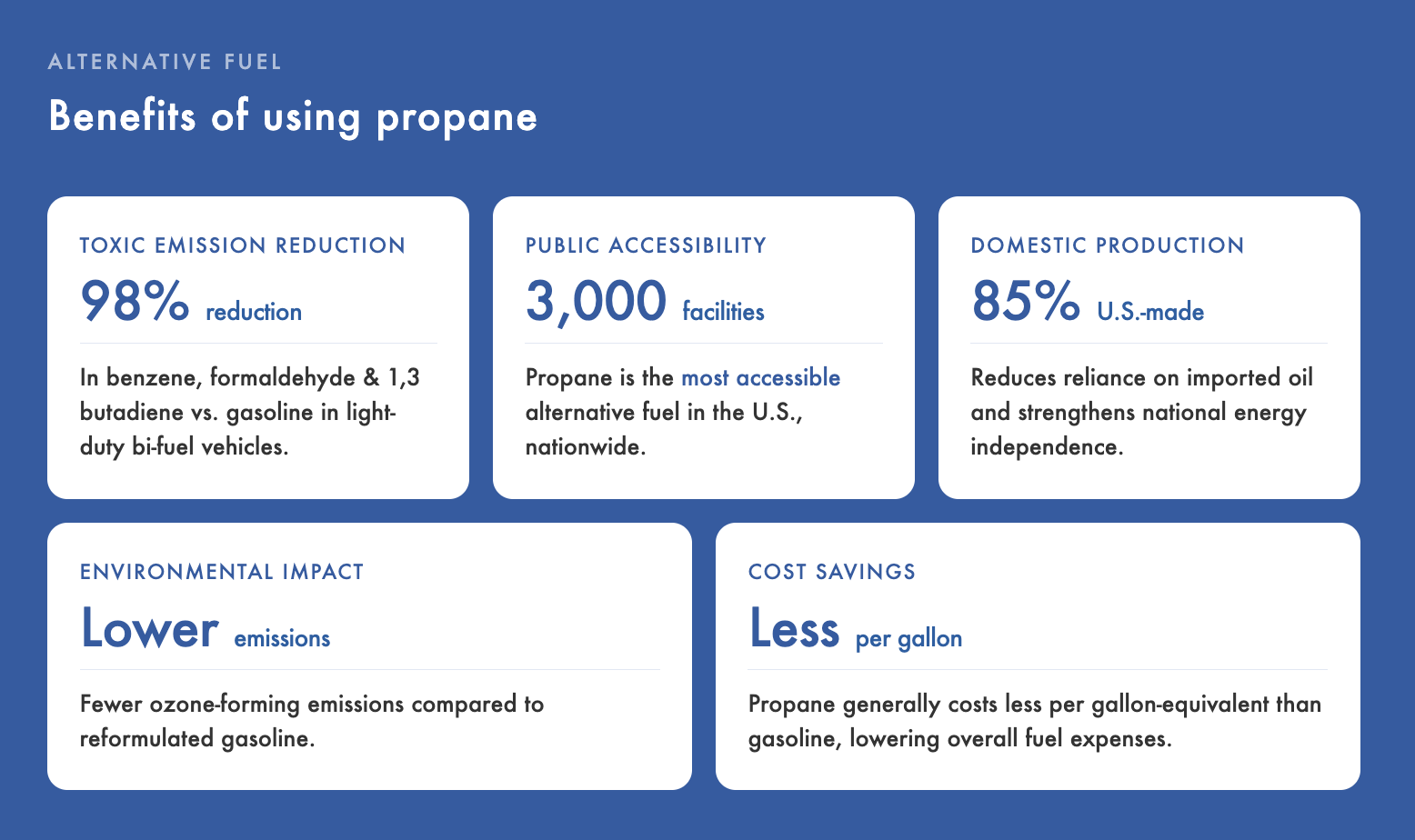
Propane vehicles produce fewer ozone-forming emissions compared to those running on reformulated gasoline.
Drastic Reduction in Toxics
Tests on light-duty, bi-fuel vehicles show a 98% reduction in toxic emissions—such as benzene, formaldehyde, and 1,3 butadiene—when switching from gasoline to propane.
Cost Savings
Propane generally costs less per gallon-equivalent than gasoline, leading to lower overall fuel expenses.
High Accessibility
As the most accessible alternative fuel in the U.S., propane is available at approximately 3,000 publicly accessible facilities nationwide.
Energy Security
Since roughly 85% of domestic propane is produced within the United States, its use reduces reliance on imported oil and strengthens national energy independence.
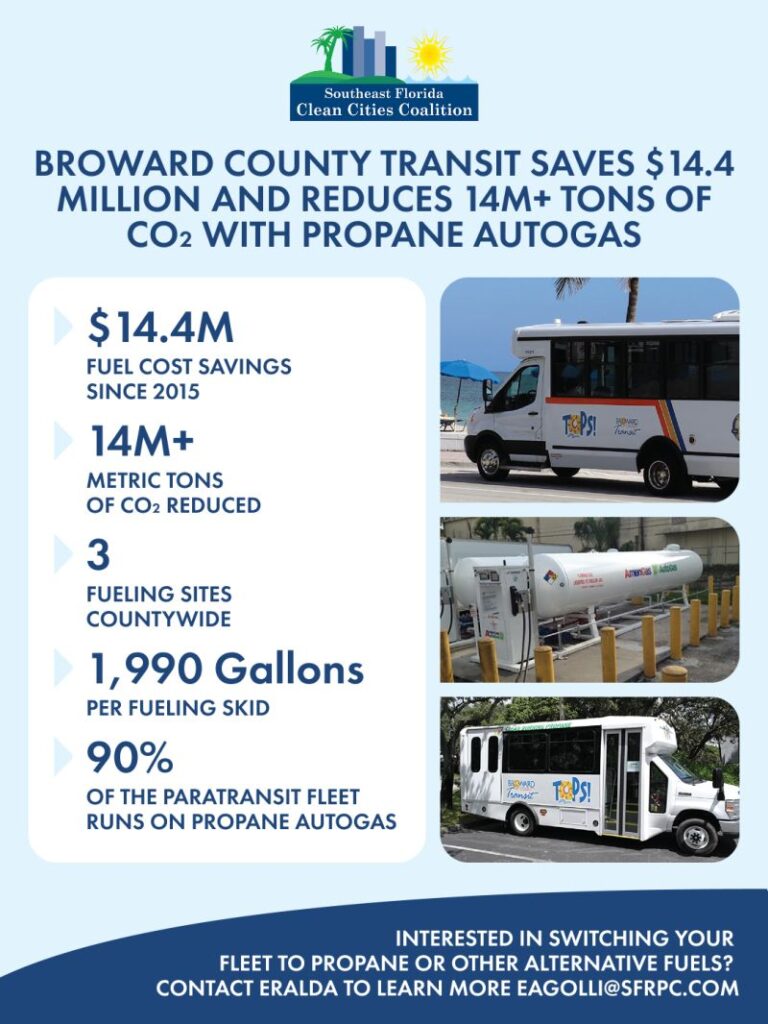
Since 2015, Broward County Transit has saved $14.4 million in fuel costs by transitioning its fleet to propane autogas, reducing emissions and improving operational resilience in the process.
The shift highlights how alternative fuel adoption can deliver measurable economic and environmental benefits at scale.