
Ethanol is a widely used renewable fuel made from corn and other plant materials. It is blended with gasoline for use in vehicles as E85.
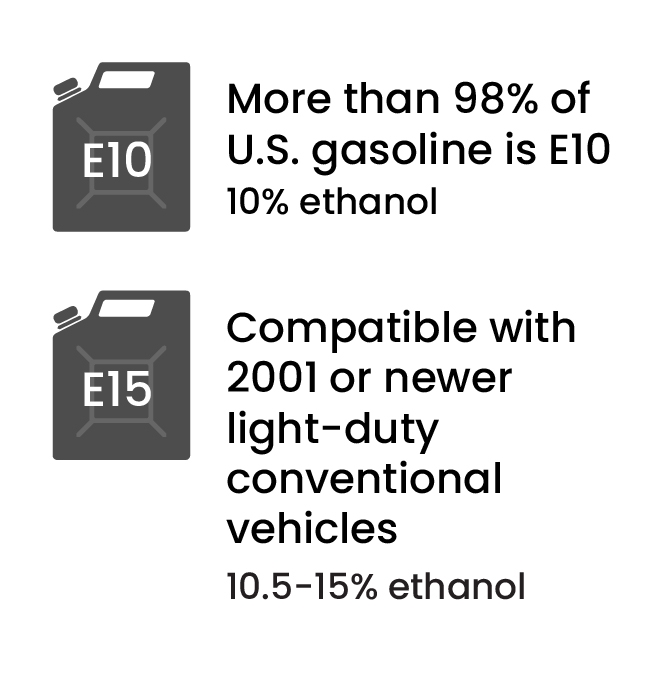
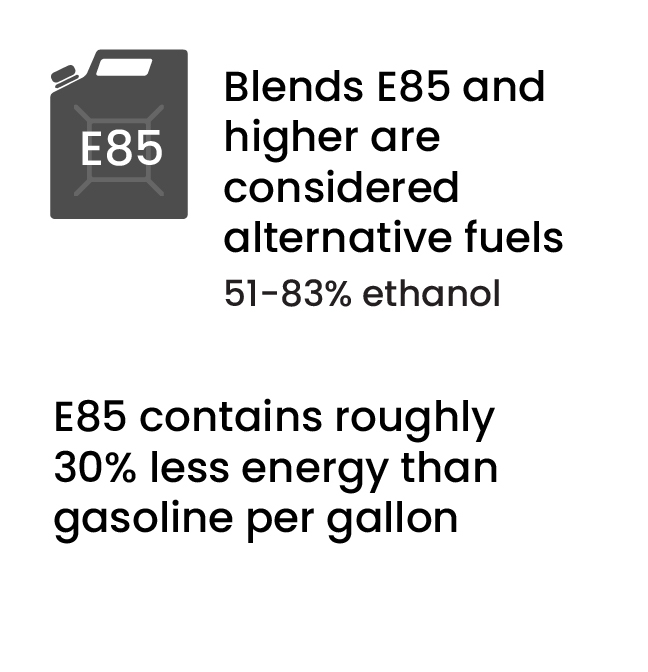
Ethanol is alcohol, derived from diverse plant material fermentation such as corn and sugarcane. It is also a renewable fuel. Ethanol fuels come in various blends with gasoline. The most common is E10 – 10 percent ethanol and 90 percent gasoline. More than 98 percent of gasoline in the United States is E10. E15 (10.5-15 percent ethanol) and E85 (51-83 percent ethanol) blends are less common. E15 is approved for use in light-duty vehicles model year 2001 and newer. E85 can be used in flexible fuel vehicles (FFVs), which have an internal combustion engine specifically designed to run on E85, gasoline, or a blend of the two. Pure ethanol (E100) is rarely used as an alternative fuel because it is feasible only in engines expressly designed or modified for this purpose. Only blends 85% or higher are considered alternative fuels.
When ethanol is blended with gasoline, it oxygenates the fuel, reducing air pollution. Ethanol also has a higher-octane number than gasoline, providing increased power and performance in vehicles. Ethanol contains 30% less energy per gallon than gasoline and can result in reduced fuel economy at higher blends.
Corn is the source of most ethanol (94 percent), with 40 percent of all corn grown in the United States used for ethanol production. Ethanol produced from corn has a positive energy balance, meaning that more energy is contained in the fuel itself than the amount to produce it. Cellulosic ethanol—derived from non-food-based feedstocks such as crop residues and wood—has an even higher energy balance and uses less fossil fuel energy, resulting in lower levels of life cycle GHG emissions. Starch and sugar-based feedstock (e.g., corn) conversion to ethanol is a mature, cost-effective technology.
Creating ethanol from cellulosic feedstocks, often waste products, or purposefully grown energy crops, presents distinct advantages, including utilizing land unsuitable for traditional crops. However, this process must become more cost effective to become a viable option for transportation fuels.
Like biodiesel, ethanol emissions are biogenic – CO2 released from burning ethanol is offset by the CO2 captured when growing the feedstock. Life cycle analyses indicate that GHG emissions are reduced on average by 40 percent with corn-based ethanol, and 88-108 percent with cellulosic feedstocks.
Although Florida does not require gasoline to be blended with ethanol, it is widely used, making Florida the third-largest consumer of fuel ethanol in the nation. However, there are no fuel ethanol production plants in the state.
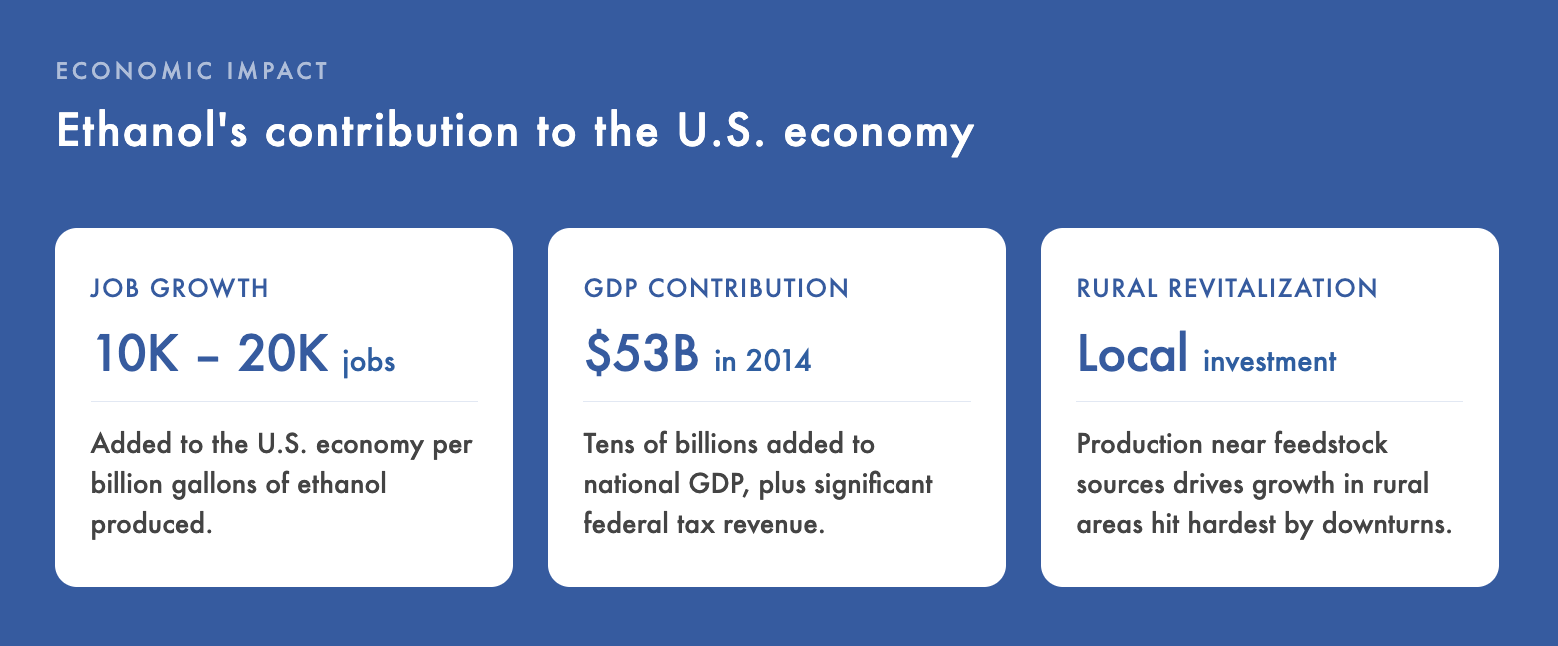
Ethanol is more than just a fuel additive; it’s a significant driver for the American economy and a key player in environmental conservation. Here is a breakdown of its primary benefits based on the data provided:
Economic Impact & Job Creation
Ethanol production serves as a massive engine for domestic growth, particularly in sectors that cannot be moved overseas.
Environmental Protection
Shifting toward ethanol significantly lowers the carbon footprint of the transportation sector.
Energy Efficiency & Security
Ethanol strengthens national energy independence by utilizing domestic resources.