
Idle reduction describes technologies and practices that reduce the amount of time that engines idle unnecessarily. Each year, U.S. passenger cars, light trucks, medium-duty trucks, and heavy-duty vehicles consume more than 6 billion gallons of diesel fuel and gasoline—without even moving. Roughly half of that fuel is wasted by passenger vehicles.
The primary motivation for idle reduction is the significant “hidden” cost of letting an engine run.
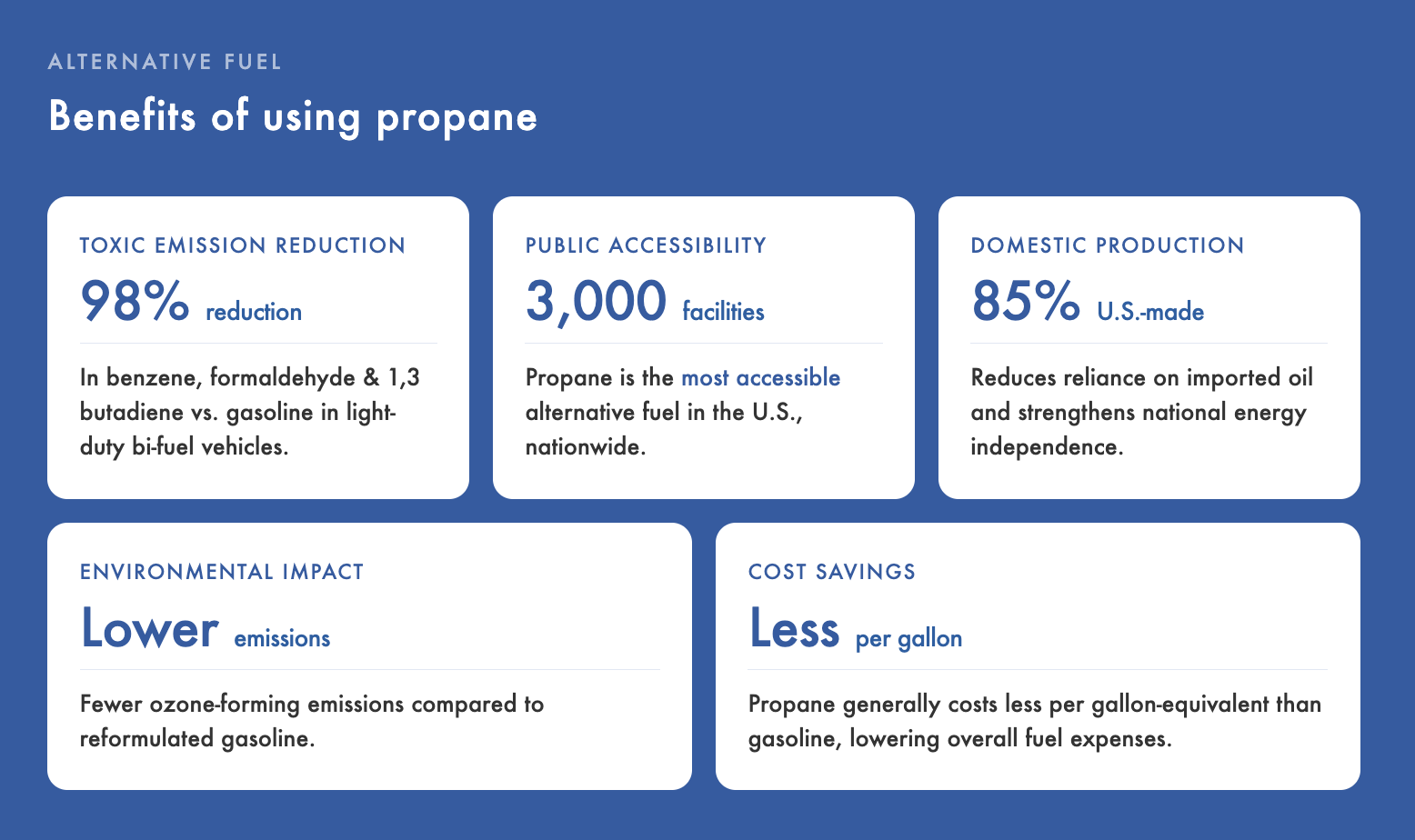
Fuel Savings
Idling can waste a surprising amount of fuel. For example, a heavy-duty truck can waste about 1 gallon of diesel per hour. For emergency vehicles like ambulances, this can be as high as 1.5 gallons per hour.
Reduced Maintenance
Idling causes twice as much wear on internal engine parts as driving at highway speeds. Reducing idle time can extend the time between oil changes and engine overhauls.
Environmental & Health Impact
Idling releases carbon dioxide (CO2), nitrogen oxides (NOx), and particulate matter. One hour of idling for an ambulance puts approximately 33 pounds of CO2 into the air.
Noise Reduction
Eliminating engine noise improves the immediate environment, which is especially beneficial for emergency crews working with patients or truck drivers trying to sleep.
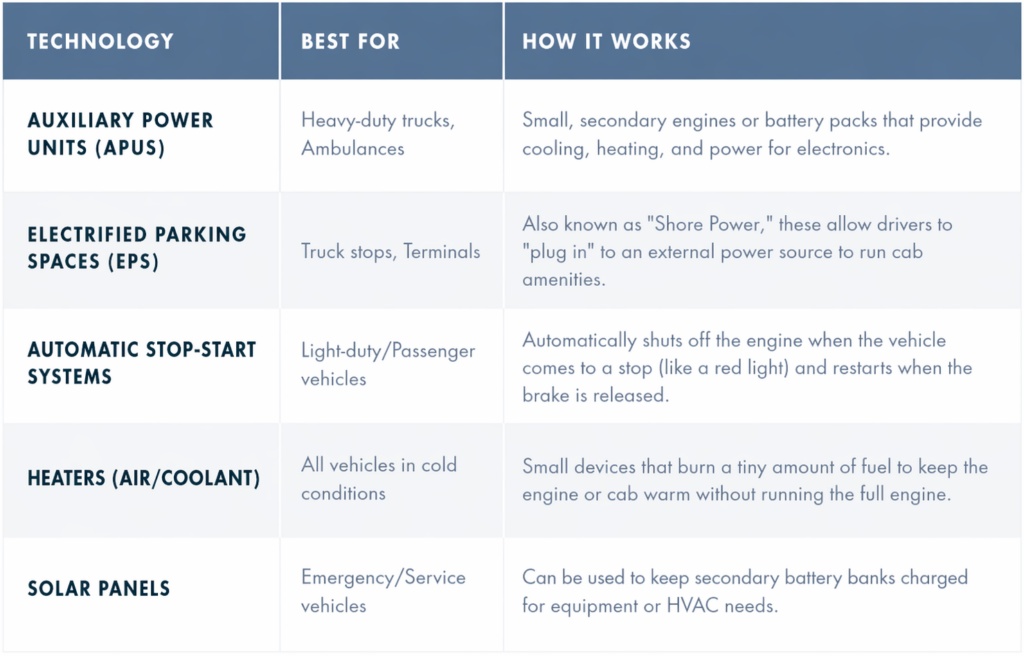
Different vehicle types require different technological solutions to maintain power and temperature control without the main engine running.
Implement Idle Policies
Creating a written policy (e.g., “Five-minute max idle”) helps set expectations for drivers.
Driver Training & Coaching
Clean Fuels highlights that “driver buy-in” is critical. Since drivers often don’t pay for the fuel themselves, coaching them on the health and maintenance benefits is necessary for adoption.
Data Monitoring
Using telematics or online dashboards (like those used by the Memphis Fire Department) allows fleet managers to track idle time and identify specific vehicles or routes where fuel is being wasted.
Utilize Toolkits
The AFDC provides an “IdleBox Toolkit,” which includes templates, presentations, and calculators to help fleet managers estimate potential savings and educate their teams.
Clean Cities Coalitions often highlight the success of the Memphis Fire Department (MFD) as a prime example of these benefits in action: